Custom Trip to Italy
Espresso at the counter in Rome, Uffizi in Florence, gondola ride at dusk in Venice.
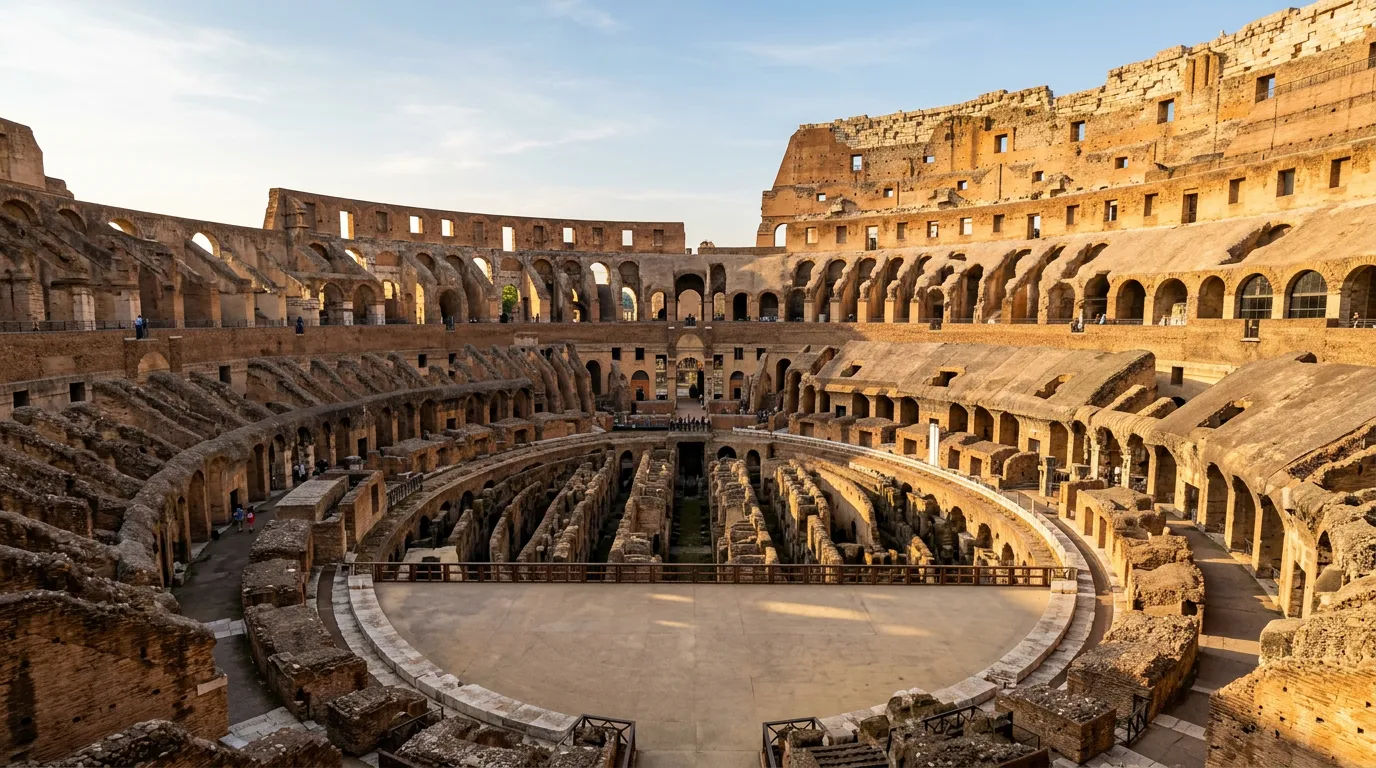
You think you know Italy. Then you go. The Colosseum from inside at 8 AM, nearly alone, with golden light falling on the stone. A 1.20-euro espresso at a neighborhood bar counter in Rome. The Uffizi in Florence, where Botticelli’s Birth of Venus stops time cold. The surprise doesn’t come from the monuments — it comes from the gap between what you expected and what you feel on the ground.
What makes Rome worth exploring on foot?
Rome is a walking city. From Trastevere to the Vatican, from the Pantheon to Piazza Navona, every alley hides a fountain or a baroque church open to all. In the evening, you eat cacio e pepe at a Testaccio trattoria for 12 euros — the dish is better than most Italian restaurants in London or New York.
The Campo de’ Fiori market opens every morning except Sunday: Roman artichokes in season, datterini tomatoes, buffalo mozzarella still warm.
Florence is smaller than you’d expect. Two or three days cover the Uffizi, Michelangelo’s David at the Galleria dell’Accademia, the panorama from Piazzale Michelangelo. Take the regional train to Lucca (90 minutes): a walled town where you can cycle on top of the ramparts. Tuscany unfolds from there — Val d’Orcia, Montepulciano, San Gimignano and its medieval towers against the sky.
When should you visit Italy and how do you get around?
April to June or September-October. Summer is hot, crowded, prices climb. The Trenitalia network connects Rome, Florence, Venice and Naples by fast train — 90 minutes between Rome and Florence, 25 euros in second class if you book early.
Venice, Cinque Terre and Naples
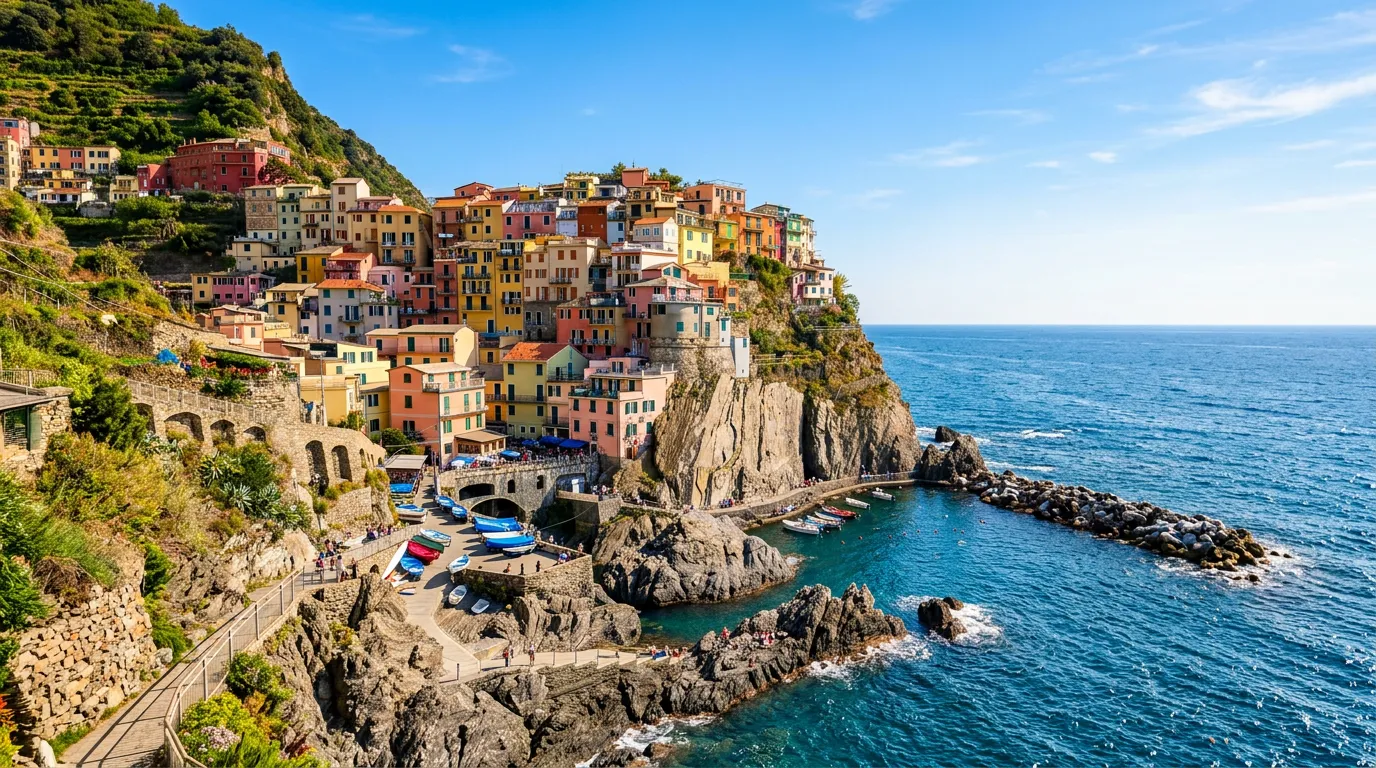
Venice at dusk, when the tourists leave and the city breathes again, shifts completely in atmosphere. Get lost in Dorsoduro, away from the Rialto crowds. The Cinque Terre, clinging to their cliffs, are connected by a coastal trail (the Sentiero Azzurro) or by train — 15 minutes between each village. Naples is worth a detour for the pizza alone: a margherita at Da Michele costs 5 euros and has a 150-year pedigree.
A custom trip to Italy means finding the right mix of art, food and dolce vita. Our personalized itinerary does that sorting for you.
Prices and information verified: March 2026.
Must-see highlights
- → The Colosseum and Roman Forums
- → The Uffizi Gallery in Florence
- → The canals of Venice
- → Tuscan gastronomy
Frequently asked questions about Italy
- When is the best time to visit Italy?
- April to June or September-October. Temperatures are mild (18-26 °C), museum queues are manageable and hotel prices stay reasonable. Summer is hot (35 °C+ in Rome), crowded and rates climb 50-100 %.
- How much does a trip to Italy cost?
- Between 70 and 130 euros per day per person. An espresso costs 1.20 euros at the counter, a trattoria meal 12-20 euros. The fast train from Rome to Florence runs about 25 euros if booked early. Hotels in Rome and Florence range from 60 to 150 euros per night depending on season.
- How many days do you need in Italy?
- Ten days for Rome (3 nights), Florence (2-3 nights) and Venice (2 nights). Two weeks let you add a Tuscan road trip, Naples or the Cinque Terre. One week works for a two-city itinerary.
- Do you need a visa for Italy?
- No. Italy is part of the Schengen Area. EU citizens travel with an ID card or passport. US, UK, Canadian and Australian citizens can enter visa-free for up to 90 days with a valid passport.