Custom Trip to Greece
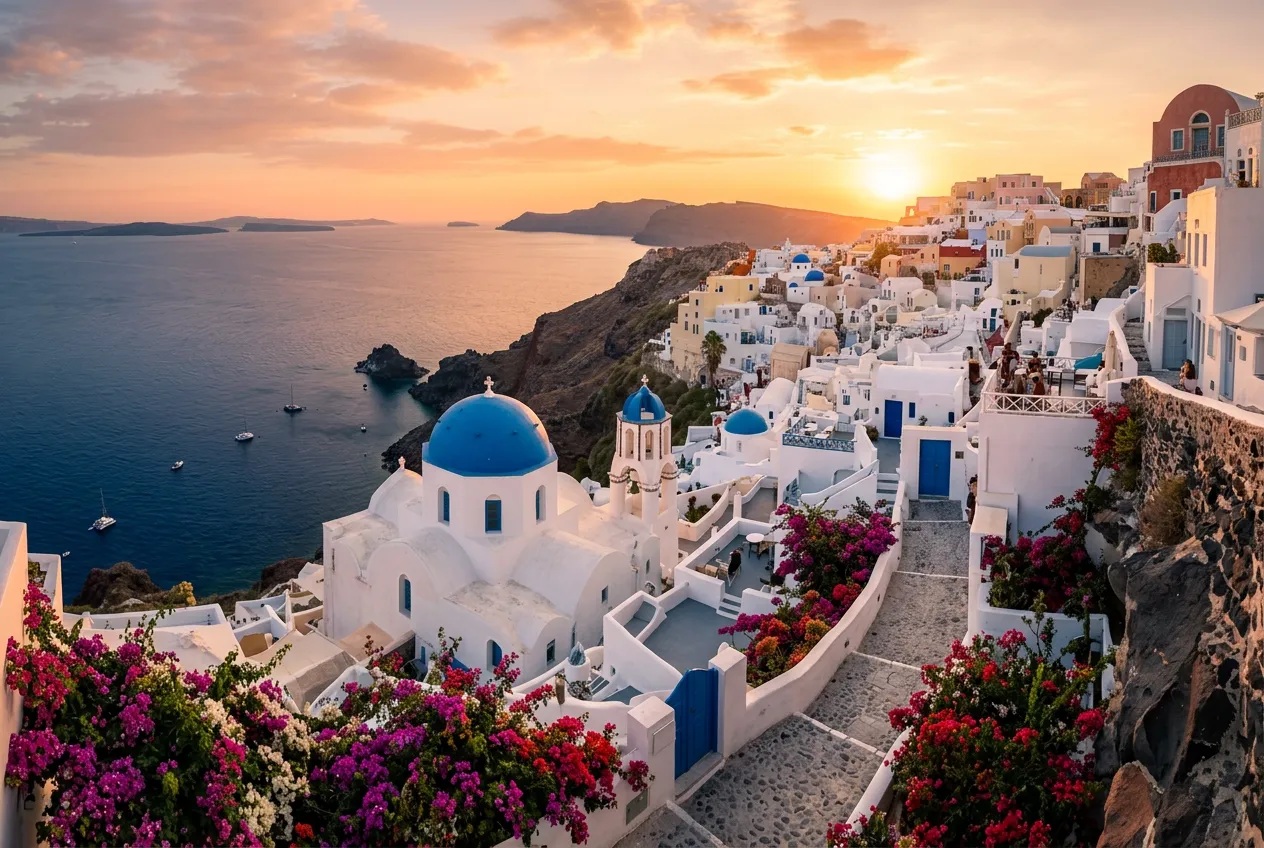
Sunset at Oia, Greek salad with sand between your toes, the Acropolis at dusk.
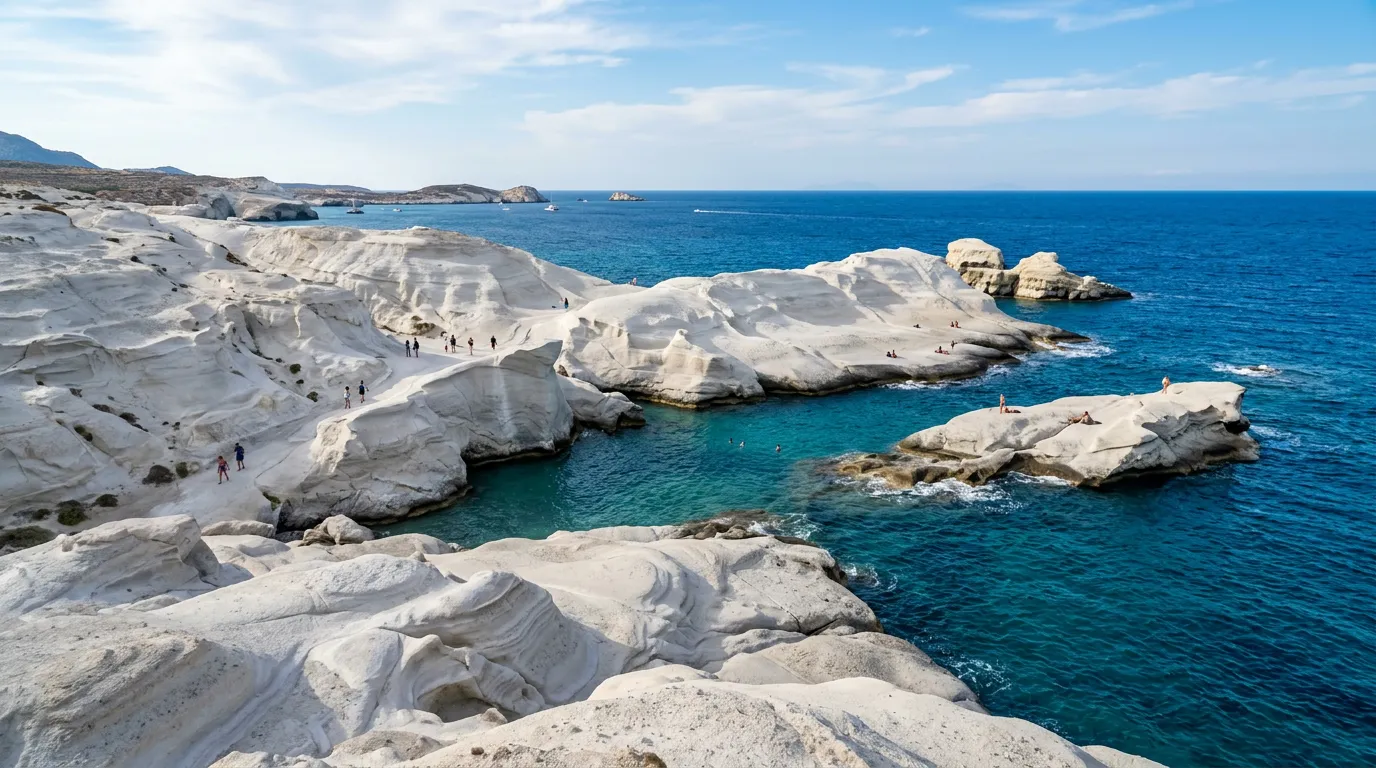
Greece hits all five senses. The smell of wild thyme on Cretan hiking trails, the almost unreal blue of Santorini’s caldera at 7 PM as the sun drops into the Aegean, the taste of Naxos feta with bread still warm from the oven. Each island has its own personality — Mykonos for nightlife, Patmos for monastic calm, Milos for volcanic rock beaches. Sarakiniko looks like a lunar landscape, white and smooth, surrounded by turquoise water.
What is there to see in Athens beyond the Acropolis?
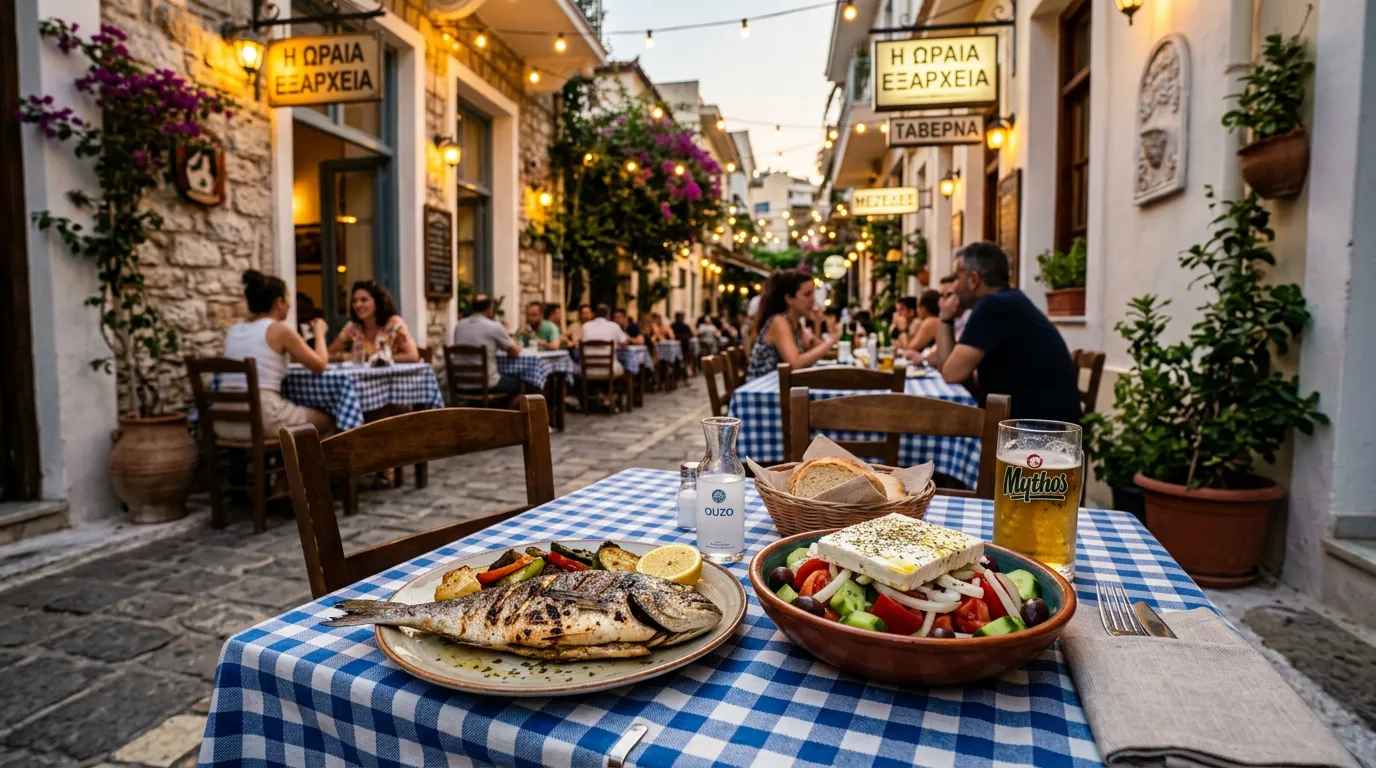
The Acropolis at dusk is worth the visit even if you’ve seen it in photos a thousand times. But Athens goes well beyond that. The Exarchia district has tavernas at 12 euros for a full meal, wine included. The Varvakios central market has been open since 1886 — fish, olives, cheeses stacked to the ceiling.
The Philopappou hills offer a view of the Parthenon that’s free and often better than the paid one. In the Plaka neighborhood, you drink a freddo espresso in the shade and watch people pass. In the evening, tavernas serve mezze on outdoor tables, and the city noise fades.
And Naxos, often overlooked, is the largest of the Cyclades. Mountain villages like Apeiranthos where old women sell kitron from their doorsteps, sand beaches stretching for kilometers, local cooking that’s simple but exact. The ferry from Athens takes about 5 hours.
When should you visit Greece and how do you get around?
May-June or September-October. In midsummer, Santorini and Mykonos are packed and prices double. Blue Star and SeaJets ferries connect the islands, but schedules shift with the season — a well-planned itinerary makes all the difference.
Hiking and connections
In Crete, the Samaria Gorge (16 km) ranks among Europe’s best hikes and takes one day. Budget about 40 to 60 euros per ferry crossing between major islands. Internal flights from Athens to Santorini or Crete take under an hour and sometimes cost less than the ferry.
A custom trip to Greece combines the islands that fit you best without unnecessary ferry rides. Your personalized itinerary handles the connections and the right balance between exploring and doing absolutely nothing.
Prices and information verified: March 2026.
Must-see highlights
- → Santorini and its white houses
- → The Acropolis of Athens
- → The beaches of Crete
- → Mykonos and its picturesque villages
Frequently asked questions about Greece
- When is the best time to visit Greece?
- May-June or September-October. Temperatures are pleasant (22-28 °C), the sea is warm enough for swimming and prices stay reasonable. In July-August, Santorini and Mykonos are packed, ferries book out and rates double.
- How much does a trip to Greece cost?
- Between 60 and 120 euros per day per person. A taverna meal runs 10-15 euros, inter-island ferries cost 40-60 euros. Hotels in the Cyclades range from 50 euros (basic room) to 150+ euros in peak season.
- How many days do you need in Greece?
- Ten days for Athens (2 nights) and two or three islands. Two weeks let you add Crete or the Peloponnese. For the Cyclades alone, one week works if you stick to two islands — ferry connections eat into your time.
- Do you need a visa for Greece?
- No. Greece is part of the Schengen Area. EU citizens travel with an ID card or passport. US, UK, Canadian and Australian citizens can enter visa-free for up to 90 days with a valid passport.