Custom Trip to Vietnam
Steaming pho in Hanoi, Ha Long Bay junks, silk lanterns in Hoi An.
Vietnam stretches over 3,000 kilometers from north to south. Every section has its own identity. In Hanoi, the old quarter smells of pho by 6 AM — plastic stools on the sidewalk, steaming broth, Thai basil you add yourself. Bun cha goes for 60,000 dong at Huong Lien (the “Obama Bun Cha” since his 2016 visit). Egg coffee (ca phe trung) at the Giang Cafe, a local invention from the 1940s, has the texture of liquid tiramisu.

What makes Hoi An and Ha Long Bay unmissable?
Ha Long Bay, with its 1,969 karst islets, is best discovered on a two-day junk cruise far from any phone signal. But Lan Ha Bay next door — accessible from Cat Ba island — has the same scenery with a tenth of the boats.
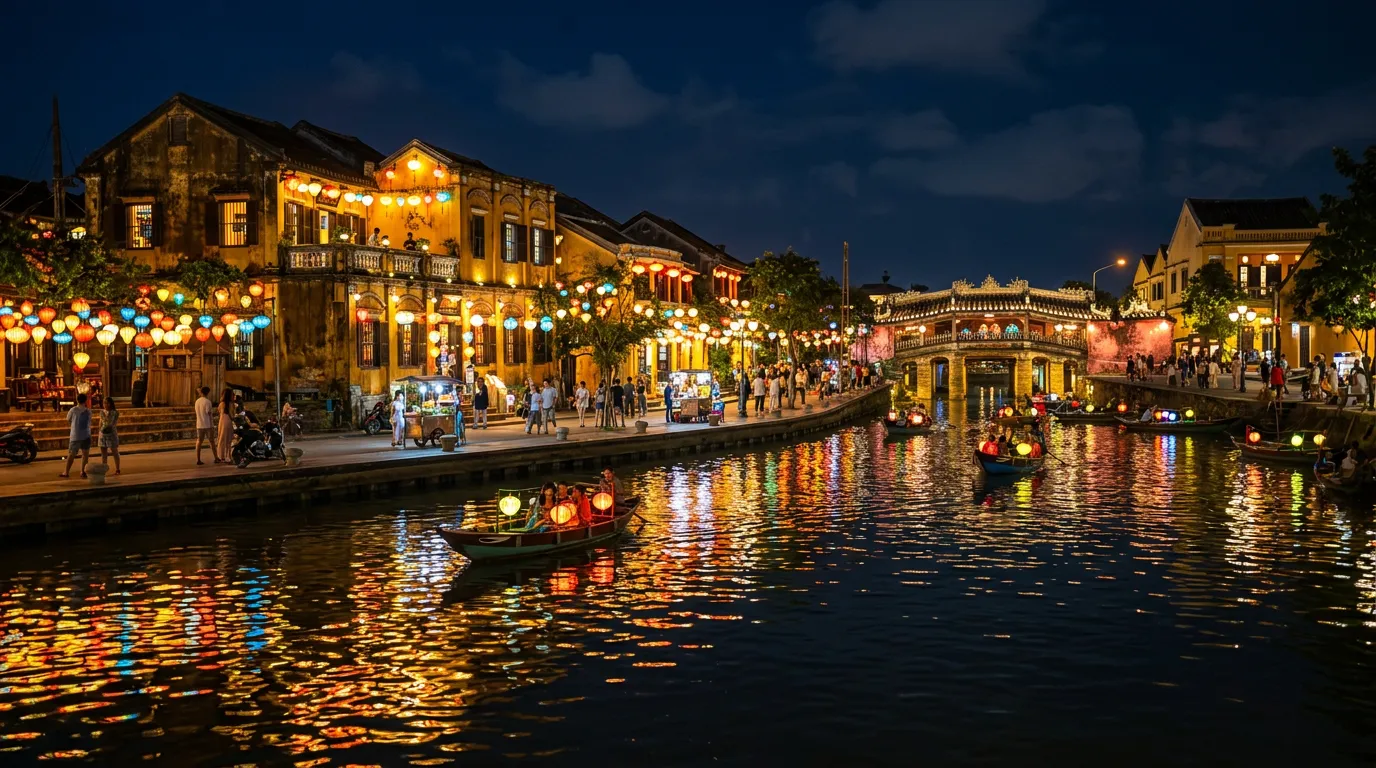
Further south, Hoi An is a town of silk lanterns, custom tailors who work in 24 hours and a 25,000-dong banh mi — the one from Madam Khanh is considered one of the best sandwiches on earth. In the evening, the old town lights up with hundreds of lanterns reflected in the Thu Bon river. You can rent a bike and ride to An Bang beach in 15 minutes.
In Sapa, the Hmong rice terraces descend into the valley like a giant’s staircase. The hike to Ta Van village takes half a day and crosses scenery that shifts with every turn.
When should you visit Vietnam and how do you travel between regions?
For the North: February to April. For the Center and South: December to April. Domestic flights with VietJet or Bamboo Airways are cheap — sometimes 20 euros per leg.
The train and secondary stops
The Reunification Express connects Hanoi to Ho Chi Minh City by train for those with time. Da Lat, a mountain town with a cool climate, deserves a two-night detour: night market, coffee everywhere, relaxed atmosphere. A full day’s food and transport in Vietnam rarely exceeds 20 euros if you eat and travel like locals do.
Planning a custom trip to Vietnam without a structured itinerary means risking missed connections between regions. Our personalized itinerary handles those logistics for you.
Prices and information verified: March 2026.
Must-see highlights
- → Ha Long Bay and its 1,969 islets
- → The ancient town of Hoi An
- → The streets of Hanoi
- → The terraced rice paddies of Sapa
Frequently asked questions about Vietnam
- When is the best time to visit Vietnam?
- February to April for the North (dry and cool, 18-25 °C). December to April for the Center and South. Vietnam stretches over 3,000 km so the climate varies by region. Avoid September-October (typhoon season on the central coast).
- How much does a trip to Vietnam cost?
- Between 30 and 60 euros per day per person. A bowl of pho costs 1-2 euros, a banh mi about 0.80 euros. Domestic flights with VietJet run 20-40 euros. A decent hotel goes for 15-30 euros per night. A full day of food and transport rarely exceeds 20 euros.
- How many days do you need in Vietnam?
- Two weeks for the classic north-south route: Hanoi (2-3 nights), Ha Long Bay (2 days/1 night), Hoi An (3 nights), Ho Chi Minh City (2 nights). Three weeks let you add Sapa, Da Lat and the Mekong Delta. Ten days work for the North alone.
- Do you need a visa for Vietnam?
- EU, US and UK citizens can enter Vietnam visa-free for up to 45 days. For longer stays, an e-visa (25 USD, 90 days) can be obtained online before departure. Passport must be valid for at least 6 months from entry.