Custom Trip to Costa Rica
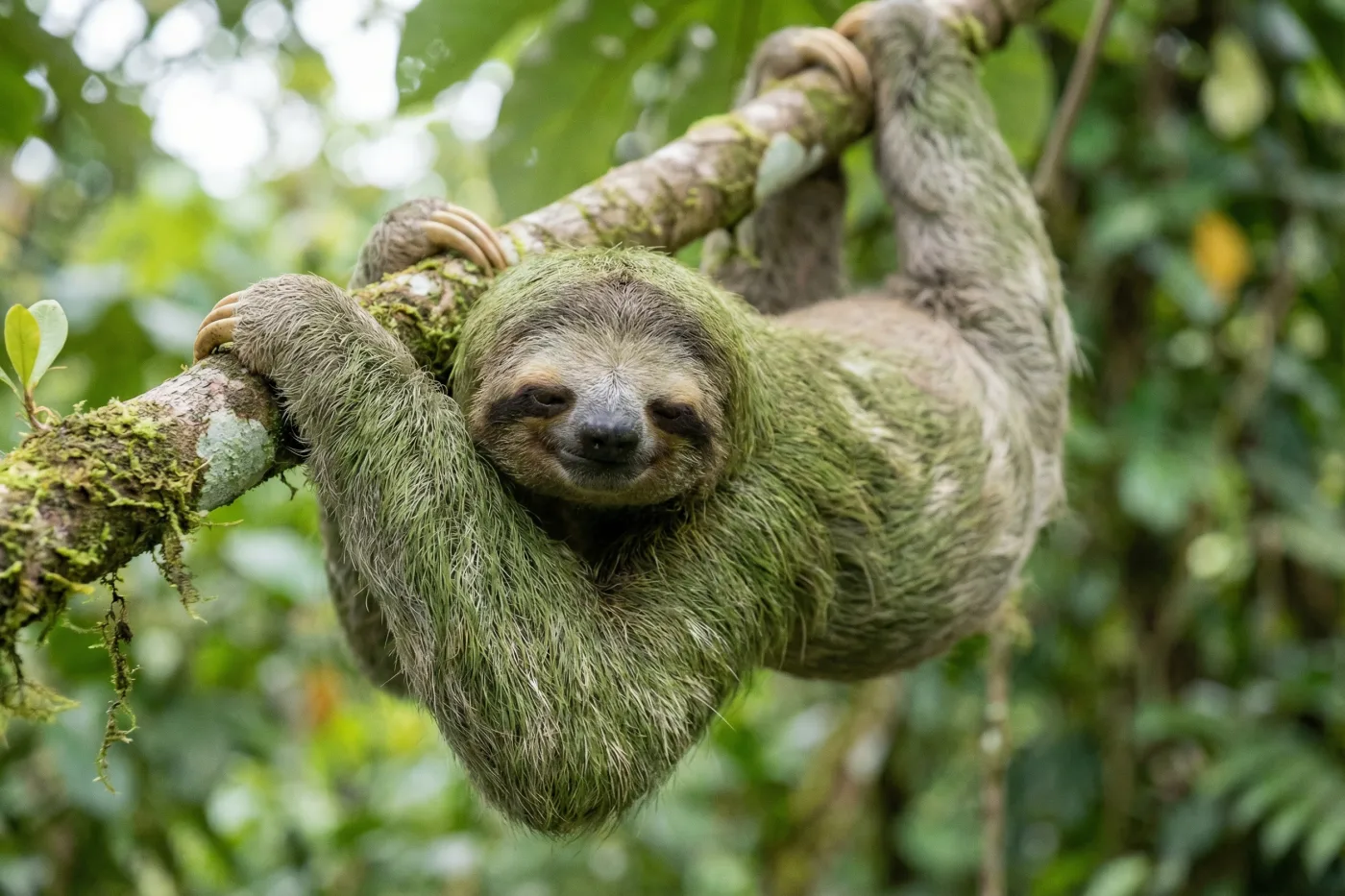
Cloud forests, Arenal volcano, slow-motion sloths and two coasts that feel like different countries.
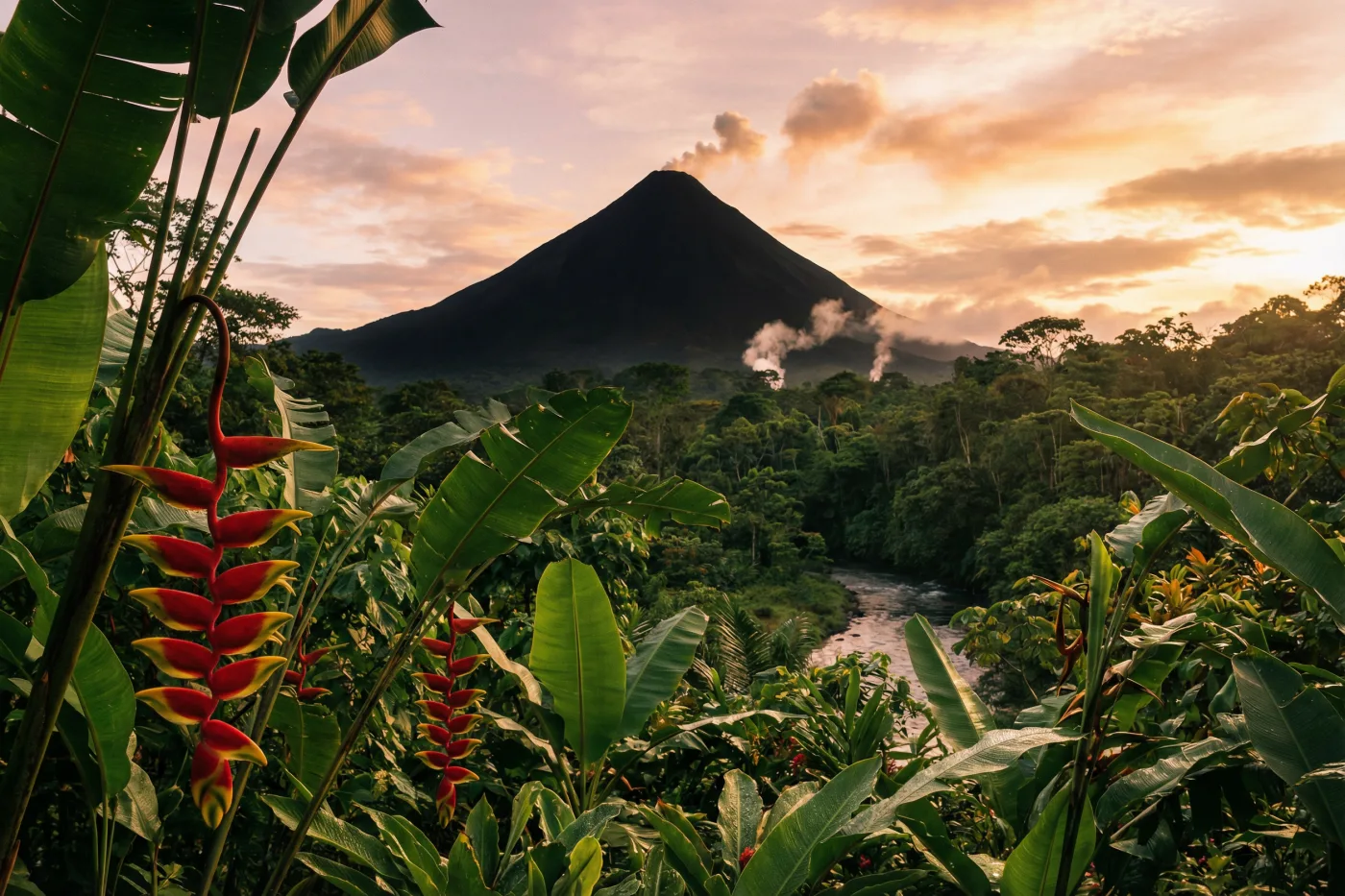
You wake up in Costa Rica to howler monkeys echoing across the valley — a sound closer to a diesel engine than an animal call. Steam rises from Arenal volcano in the distance, gallo pinto arrives at the table with specialty coffee grown in the central valleys. The country is tiny: 51,000 km², roughly the size of Switzerland. But it packs 6% of the world’s biodiversity onto two coasts, six active volcanoes, and about a dozen climate zones. Pura Vida isn’t a tourism slogan. It’s a pace that catches up with visitors by their third day, and that takes a while to shake off once home.
Why Monteverde and Corcovado anchor Costa Rican wildlife
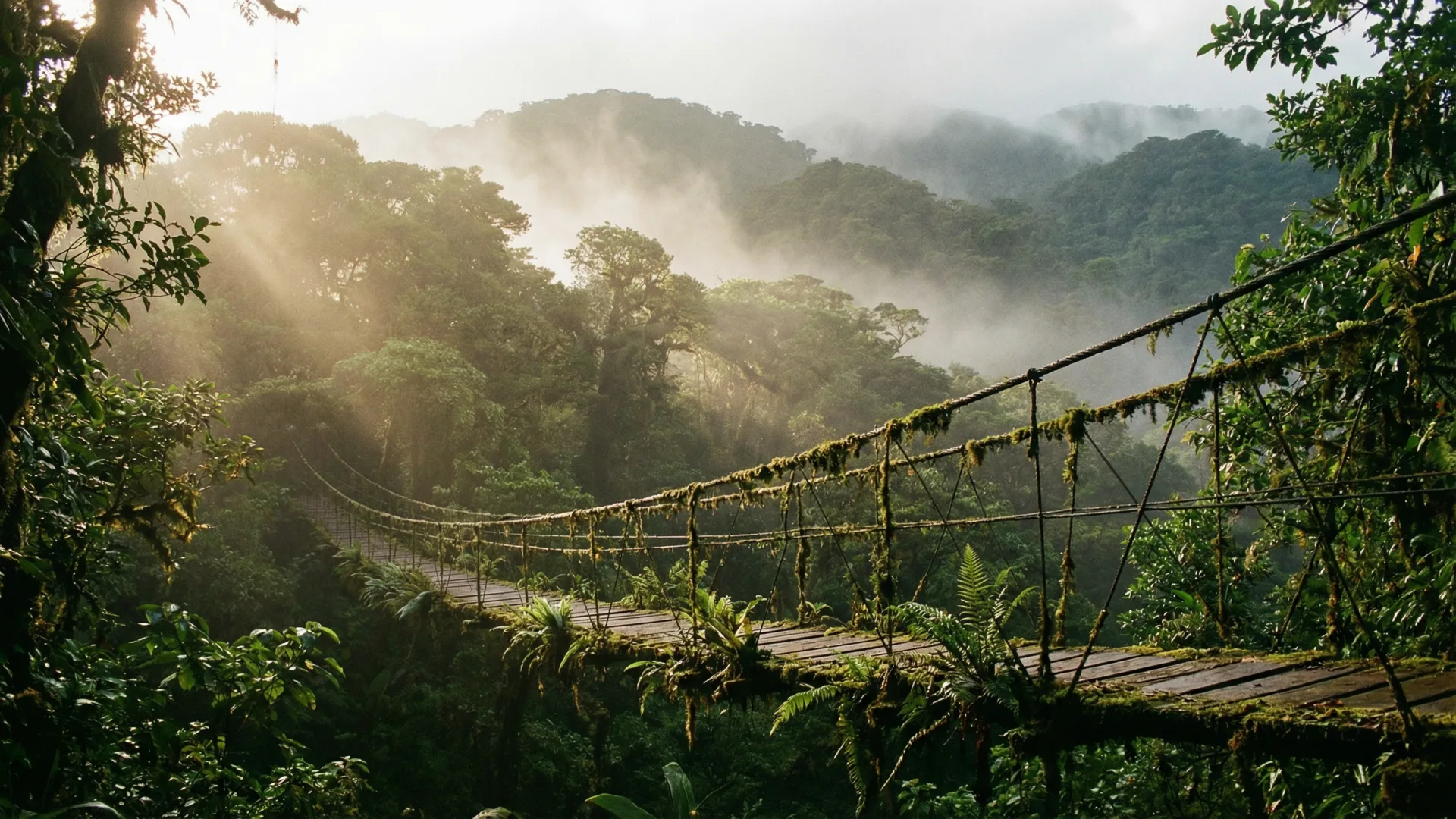
At Monteverde, mist wraps the cloud forest trails from 6 AM onward. The Selvatura hanging bridges (30 USD entry) cross the canopy at 40 meters up. You hear more than you see. Resplendent quetzals — the sacred bird of the Maya — nest in wild avocado trees between February and July. A local guide spots in minutes what an untrained eye hunts for across an hour. The hummingbird gardens at El Trapiche bring 14 different species within arm’s reach.
The Osa Peninsula, further south, plays in a different league. Corcovado stays the country’s most biologically dense park — National Geographic once called it “the most biologically intense place on Earth”. Jaguars, Baird’s tapirs, scarlet macaws in flocks of thirty, common dolphins off Drake Bay. Access runs by boat from Sierpe, then strictly on foot with a certified guide (mandatory since 2014). Park entry: 20 USD, guide fee 75-90 USD per day.
Two coasts, two moods
The Pacific draws visitors first. Santa Teresa, at the tip of the Nicoya Peninsula, kept its dirt roads and an international surf scene — waves break consistently until 1 PM. Manuel Antonio mixes white-sand beaches with protected forest, and capuchin monkeys that open any bag left unattended. Uvita and the Marino Ballena park empty out once humpback whales leave in October.
The Caribbean feels like another country. Puerto Viejo moves to calypso and reggae, people eat rondón (fish stew with coconut milk), rice and beans cooked with spices brought over from Jamaica. At Cahuita, the coral reef snorkels right off the beach — you’ll spot stingrays and parrotfish without the scuba gear hassle. The drive between the two coasts takes 5 to 6 hours, with a San José crossing you can’t avoid.
When to visit and how to get around
Dry season runs December to April. Skies stay clear over the volcanoes, trails aren’t muddy, and the Nicoya Peninsula dirt roads remain drivable without a 4x4. The green season (May to November) brings afternoon showers — short and intense, followed by sun. Prices drop around 20%, parks stay nearly empty. September and October are the wettest months — skip them if you’re aiming for the Caribbean side.
For getting around, a 4x4 remains the best choice if you’re leaving the main highways. Count on 45-70 euros per day depending on season. Shuttle companies like Interbus connect the tourist hubs at 50 USD per route, with AC and wifi. Public buses cost a third as much but sometimes double the travel time. The main airport is SJO (San José), and SANSA runs domestic flights to Drake, Tamarindo or Puerto Jiménez for 80-120 USD — useful when distances get too long.
Watch out for the classic trap: 100 km in Costa Rica means 3 hours of driving. Maps lie, and so do optimistic GPS estimates. A custom trip to Costa Rica calibrates distances around your pace and your interests — not a cookie-cutter circuit, but something that respects your own tempo.
Prices and information verified: April 2026.
Must-see highlights
- → Monteverde cloud forest
- → Arenal volcano and La Fortuna
- → Manuel Antonio National Park
- → Osa Peninsula and Corcovado
- → Tortuguero canals
Frequently asked questions about Costa Rica
- When is the best time to visit Costa Rica?
- December to April, during the dry season. Park trails stay walkable, volcano views are clear, and the Pacific beaches get consistent sun. The green season (May to November) brings short afternoon tropical showers, but the vegetation explodes and prices drop around 20%.
- How much does a trip to Costa Rica cost?
- Budget 60 to 120 euros per day per person. A meal at a soda (local diner) runs 6-9 euros, a decent lodge 60-100 euros per night. National park entries are around 15-20 USD. A 4x4 rental costs 45-70 euros per day depending on the season.
- How many days do you need in Costa Rica?
- Ten days minimum to combine Arenal, Monteverde and one coast. Two weeks let you add the south Pacific (Uvita, Corcovado) or the Caribbean (Puerto Viejo). Three weeks open up Tortuguero, Nicoya, and the more isolated corners of Guanacaste.
- What wildlife can you see in Costa Rica and where?
- Sloths and capuchin monkeys in Manuel Antonio, jaguars and tapirs in Corcovado, resplendent quetzals in Monteverde, scarlet macaws at Carara, sea turtles in Tortuguero between July and October. A local naturalist guide dramatically raises your odds of spotting wildlife — count on 40-60 USD for a morning outing.