Custom Trip to Morocco
Marrakech souks, Chefchaouen blue, starlit night at Merzouga.
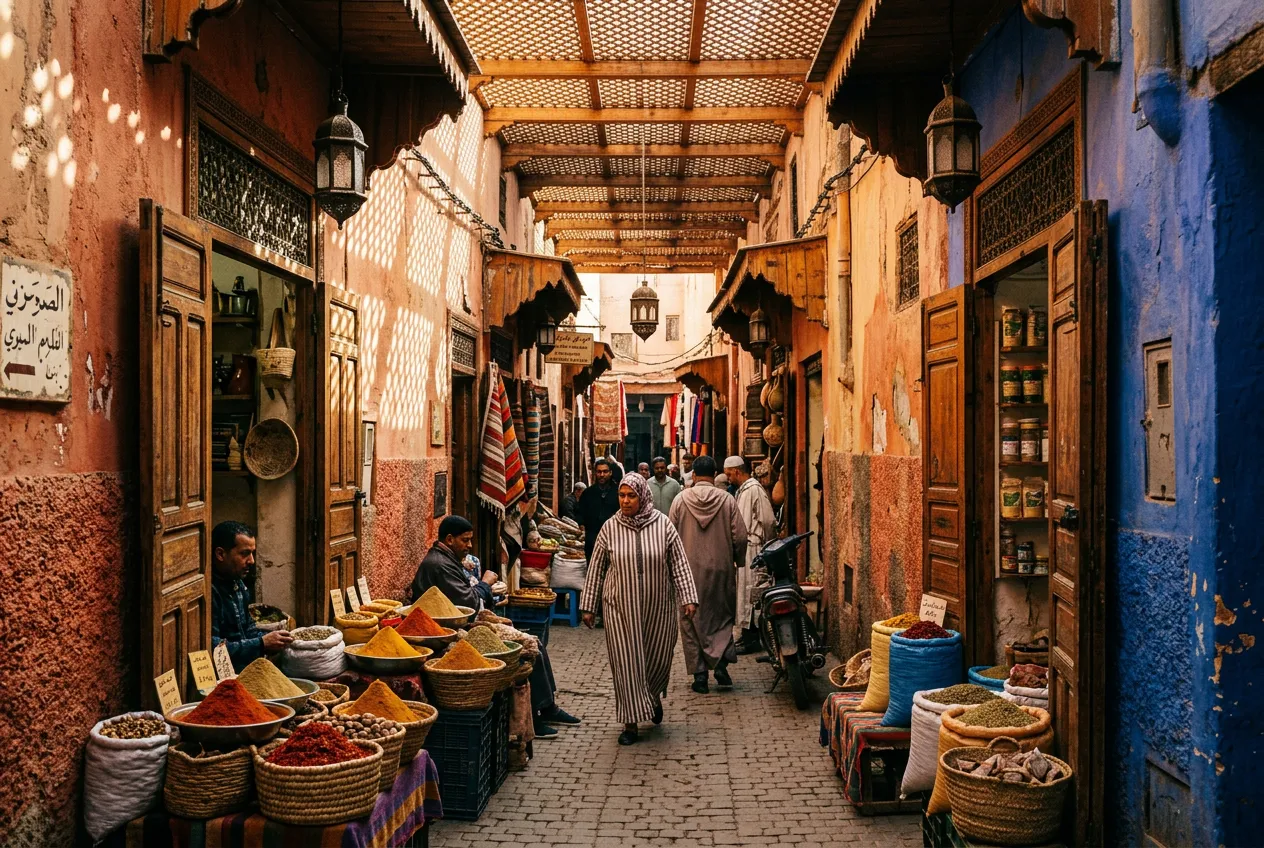
Morocco hits you through smell before sight. The spices in Marrakech’s souks — cumin, saffron, ras el hanout. The sound of hammers on copper in the Fez medina, the oldest in the world. Jemaa el-Fna square changes face by the hour: fresh orange juice in the morning (4 dirhams a glass), street vendors in the afternoon, grill smoke and storytellers at night.
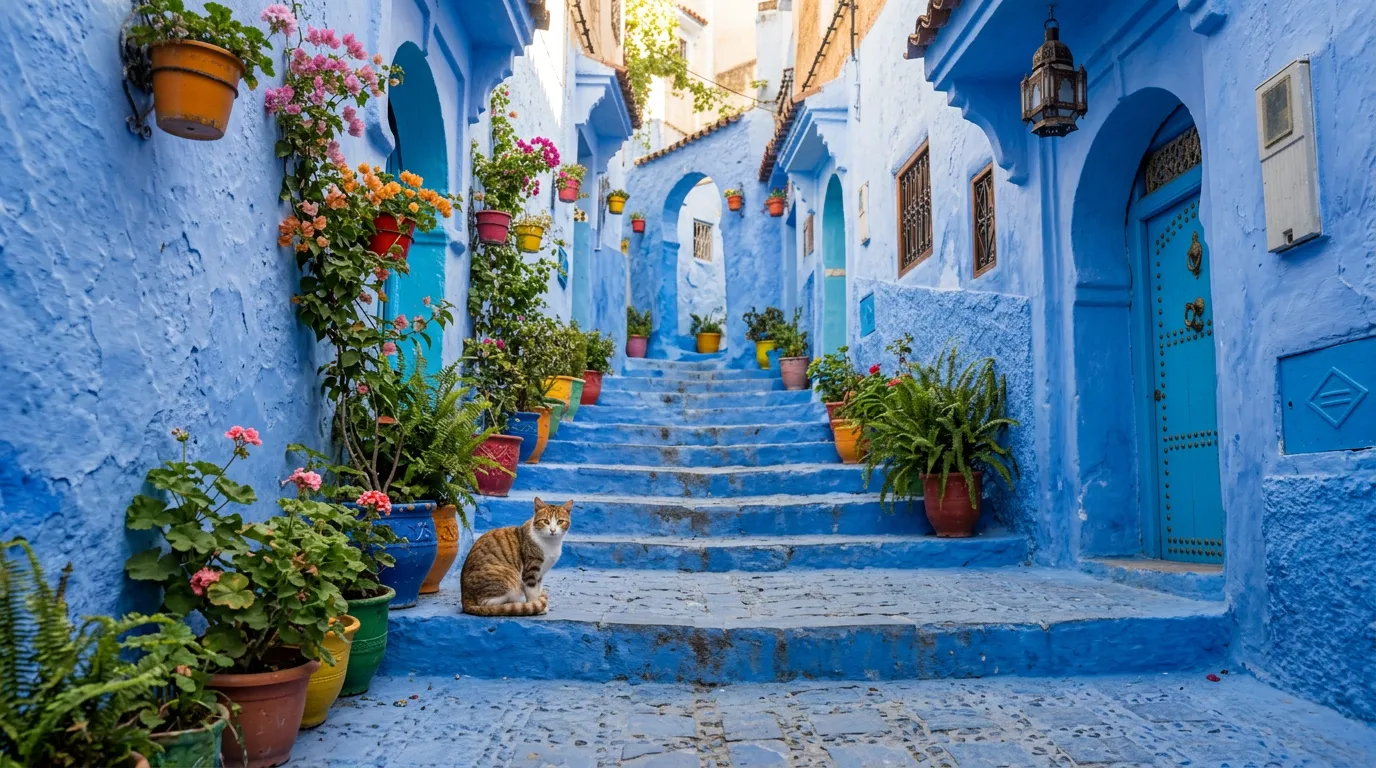
What should you see in Morocco beyond Marrakech?
In Chefchaouen, everything is blue: the walls, the doors, the stairways, the flower pots. You photograph it constantly but the town stays strangely calm. The Akchour waterfall, an hour’s hike away, is a swimming spot popular with locals and rarely visited by tourists.
Marrakech deserves two or three nights. Riads in the Kasbah quarter run 30 to 80 euros a night — inner courtyard, fountain, breakfast on the rooftop terrace with Atlas views. The Jardin Majorelle, bought by Yves Saint Laurent in 1980, is a rectangle of cobalt blue and giant bamboo.
The Fez tanneries, though, don’t come without preparation: they’ll hand you a sprig of mint to hold under your nose during the visit.
The deep south
In the south, the Dades Gorges carve red rock for dozens of kilometers. The Route of a Thousand Kasbahs connects Ouarzazate to Errachidia — one of the country’s most striking road trips. The landscape turns from green to ochre to red as you drive south.
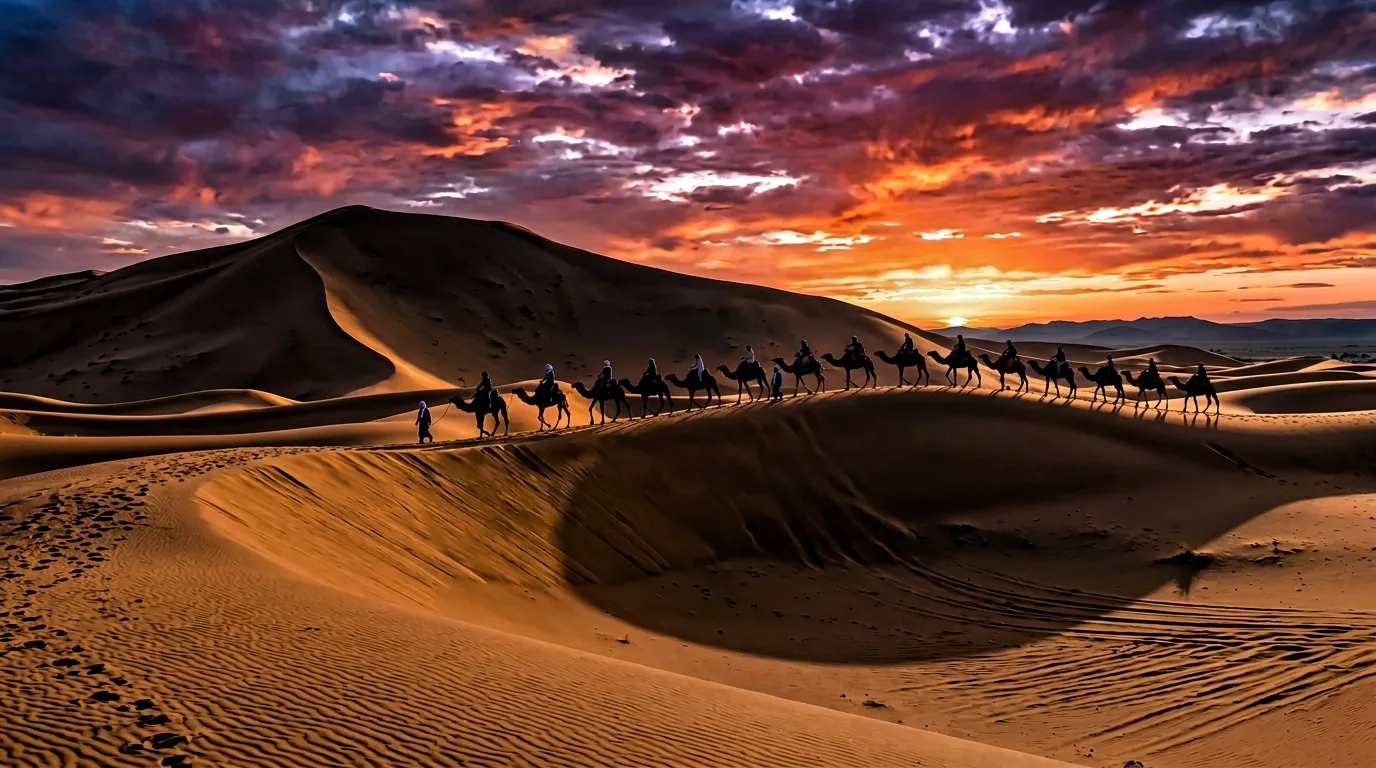
When is the best time to travel through Morocco?
March to May and September to November. Summer temperatures in the south exceed 45 degrees. The Erg Chebbi dunes near Merzouga rise to 150 meters — you sleep under the stars there, in total silence, after a camel ride at sunset. A slow-cooked Berber tagine over wood fire tastes like something no city restaurant will ever replicate.
Getting around
CTM and Supratours buses connect major cities, and shared grand taxis are the fastest (and most local) way to travel between smaller towns. A night in a desert camp runs 30 to 60 euros, dinner and breakfast included.
A custom trip to Morocco connects these stops by the right roads, at the right pace. Our personalized itinerary spares you the logistical stress.
Prices and information verified: March 2026.
Must-see highlights
- → The souks of Marrakech and Jemaa el-Fna square
- → The blue medina of Chefchaouen
- → The Erg Chebbi desert in Merzouga
- → The Dades Gorges and the Valley of Roses
Frequently asked questions about Morocco
- When is the best time to visit Morocco?
- March to May and September to November. Temperatures are comfortable (20-28 °C) in the imperial cities and the desert. Summer exceeds 45 °C in the south and the desert becomes impractical. Winter stays mild on the Atlantic coast (15-20 °C).
- How much does a trip to Morocco cost?
- Between 40 and 80 euros per day per person. A tagine costs 4-8 euros, a riad with breakfast 30-80 euros per night. Long-distance CTM buses run 10-20 euros per trip. A night in a desert camp costs 30-60 euros, dinner and breakfast included.
- How many days do you need in Morocco?
- Ten days for Marrakech (2-3 nights), the desert via the Dades Gorges (2-3 nights), Fez (2 nights) and Chefchaouen (1-2 nights). One week works for Marrakech, Essaouira and the desert. Two weeks let you add the Atlantic coast or the High Atlas mountains.
- Do you need a visa for Morocco?
- No. EU, US, UK and Canadian citizens can enter Morocco visa-free for up to 90 days with a valid passport (must be valid for at least 3 months beyond your return date).