Custom Trip to Japan
Kyoto at first light, steaming ramen in Shinjuku, silence on Mount Fuji.
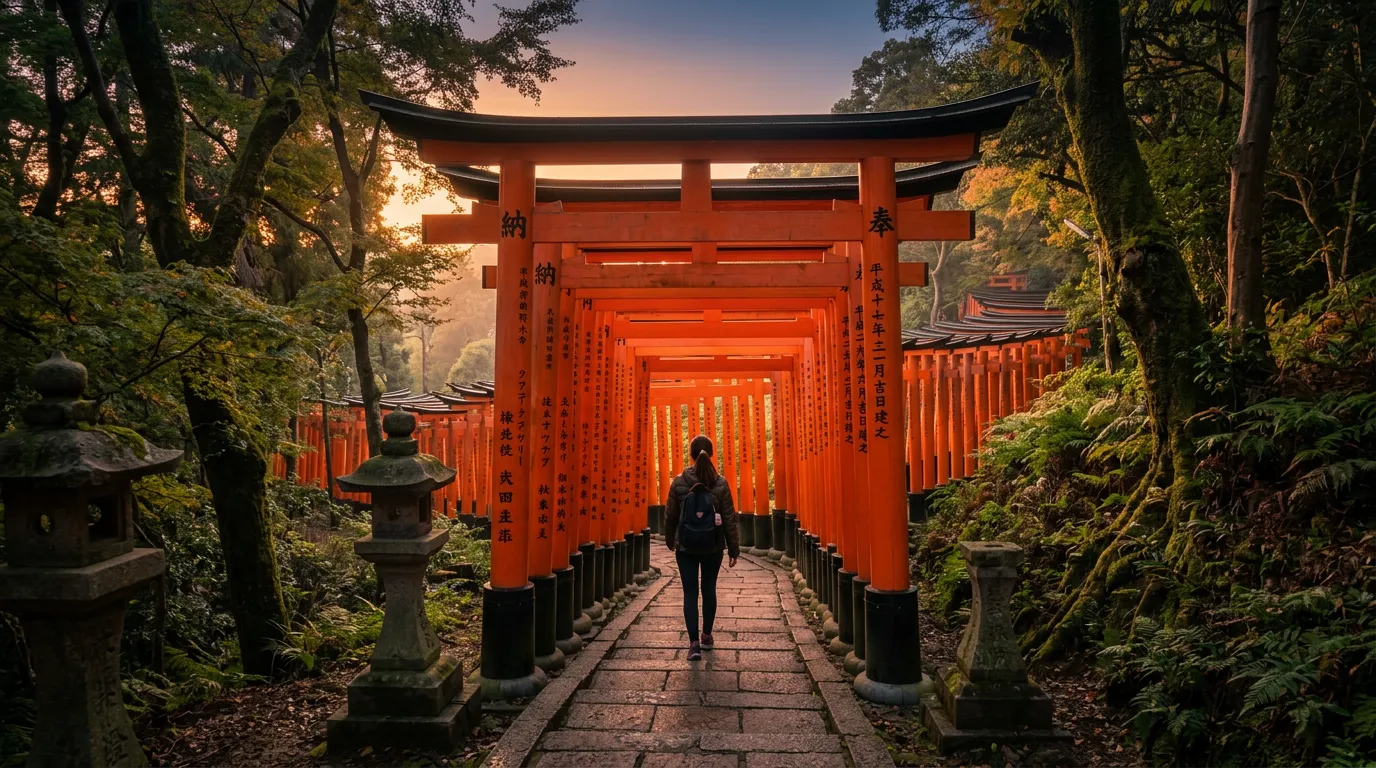
Japan doesn’t compare to anywhere else. In Kyoto, the 10,000 vermilion torii gates of Fushimi Inari form an orange tunnel at dawn, when light filters between the pillars and your footsteps echo alone on the stone. Two hours later, in Tokyo, the Shinjuku district shifts from a silent imperial garden to the joyful chaos of a basement izakaya. Less than 200 meters separate the two worlds.
What are the best onsen experiences in Japan?
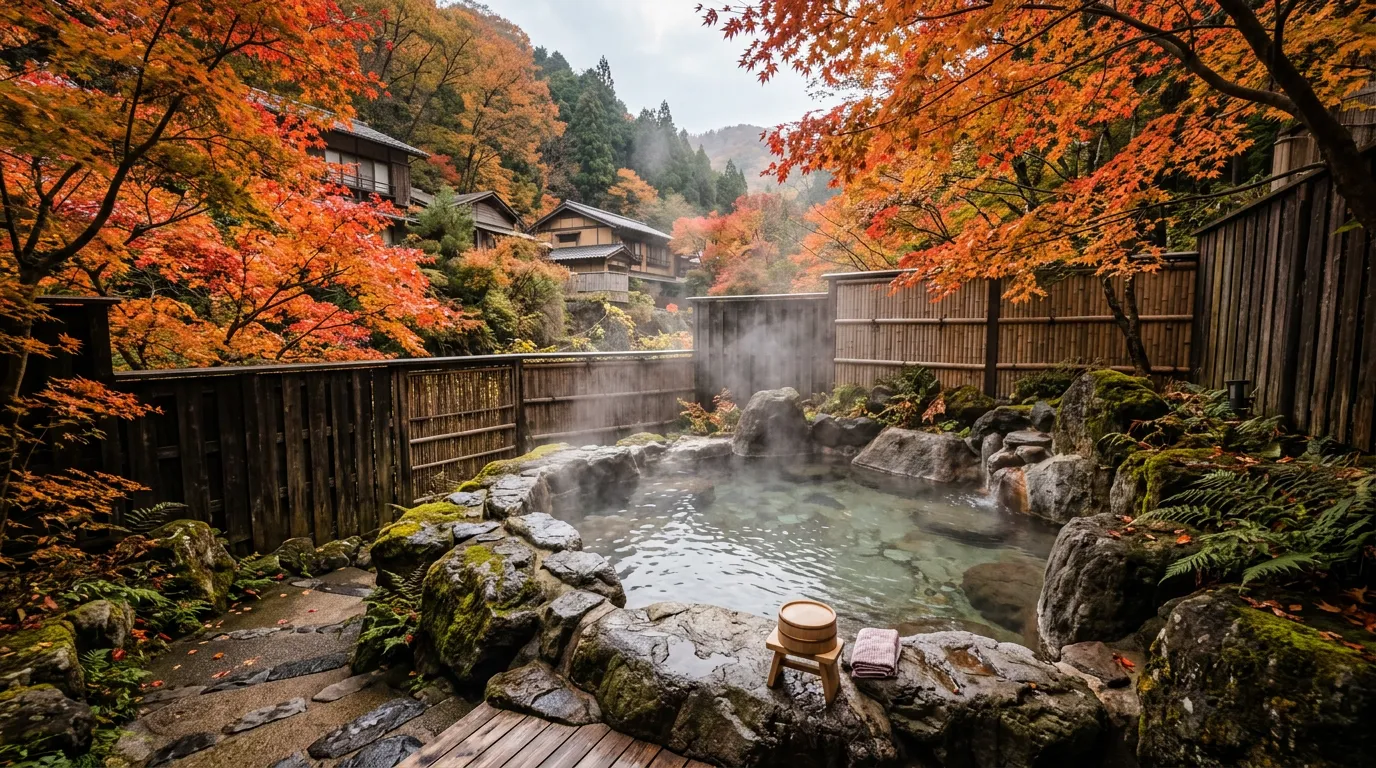
In the village of Kurokawa on Kyushu island, outdoor baths are carved between rocks alongside a river. Steam rises into the cold November air. The ryokan serves kaiseki dinner in your room — eight small dishes arranged like miniature paintings. A ryokan stay costs between 80 and 200 euros per night, meals included.
Every bowl of ramen at an 8-seat counter rivals a starred restaurant elsewhere. In Osaka, the takoyaki in Dotonbori are crispy outside, melting inside, scalding everywhere. Japan might be the only country where a 5-euro convenience store meal counts as a lasting memory.
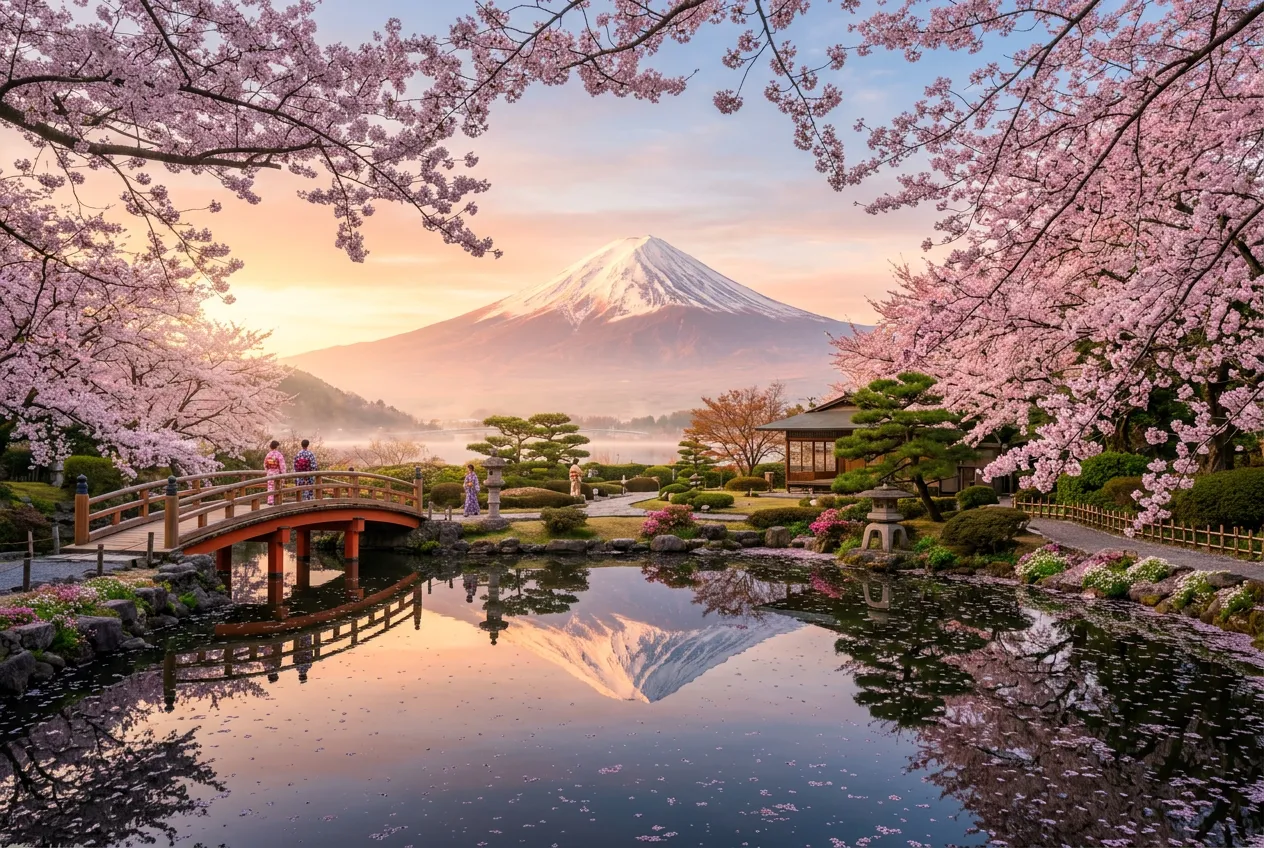
The Arashiyama bamboo forest creaks in the wind. The deer of Nara approach without fear. And Mount Fuji appears some mornings through the Shinkansen window, sharp and enormous against the sky.
When should you visit Japan and how do you get around?
The ideal time: late March for cherry blossoms (book early — everything fills up fast) or November when maples turn red across Kyoto. The Japan Rail Pass gives unlimited access to the Shinkansen and regional trains for 7, 14 or 21 days — it’s the best transport investment of the trip.
IC cards and street food
The IC card (Suica or Pasmo) covers metros, buses and convenience store purchases. At the outer Tsukiji market in Tokyo, you can eat fatty tuna sushi at 7 AM standing at the counter. A full day’s food in Japan rarely exceeds 30 euros if you eat like locals do.
A custom trip to Japan means accepting that each day will hold ten moments you’ll remember for years. Your itinerary adapts to your pace so nothing gets left behind.
Prices and information verified: March 2026.
Must-see highlights
- → The temples of Kyoto and Nara
- → Tokyo gastronomy
- → Mount Fuji and its surroundings
- → The bamboo forests of Arashiyama
Frequently asked questions about Japan
- When is the best time to visit Japan?
- Late March to mid-May for cherry blossoms (sakura), or November when Kyoto's maples turn red. Both seasons have mild temperatures (15-22 °C). Book ryokans at least two months ahead during sakura season — everything fills up fast.
- How much does a trip to Japan cost?
- Between 80 and 150 euros per day per person. A bowl of ramen costs 7-10 euros, a convenience store meal 4-5 euros. The 7-day Japan Rail Pass runs about 200 euros. A ryokan with kaiseki dinner goes for 80-200 euros per night.
- How many days do you need in Japan?
- Ten days for the essentials: Tokyo (3 nights), Kyoto (3 nights), Osaka (2 nights) and a Mount Fuji excursion. Two weeks let you add Hiroshima, Nara and an onsen in Kyushu. Three weeks open up rural Japan — Takayama, Kanazawa, the Japanese Alps.
- Do you need a visa for Japan?
- No. EU and US citizens can enter Japan visa-free for up to 90 days with a valid passport. Since 2024, Japan requires online pre-registration through Visit Japan Web before arrival.