“When should I go to Southeast Asia?” is the question we get asked the most. And the answer is always the same annoying consultant response: it depends.
It depends because Southeast Asia isn’t one climate. Thailand’s dry season overlaps with Vietnam’s wettest months. Bali has its own rhythm. Sri Lanka has two monsoons hitting different coasts at different times.
Here’s what we’ve learned from planning hundreds of trips to the region.
Thailand: November through February
The classic window. Temperatures sit around 28–32°C, humidity drops to tolerable levels, and it barely rains. Bangkok, Chiang Mai, and the southern islands are all in good shape.
March and April get brutally hot — 38°C in Bangkok isn’t unusual. The Songkran water festival in mid-April is worth it if you’re into chaos. Otherwise, skip.
May through October is monsoon season. Here’s the thing though: it doesn’t rain all day. You get a heavy afternoon downpour for an hour or two, then sunshine. Hotels are half-price. Beaches are empty. If you don’t mind getting wet, it’s a great time.
Vietnam: it’s complicated
Vietnam stretches 1,650 km north to south. There’s no single “best time.”
- The north (Hanoi, Ha Long Bay, Sapa): October to December. Cool and dry. January gets cold — actually cold, 10°C in Sapa.
- Central (Hoi An, Hue, Da Nang): February to May. Typhoon season runs September to November — avoid.
- The south (Ho Chi Minh City, Mekong Delta): December to April. Dry and warm. The wet season (May–November) works fine for HCMC but makes the Mekong muddy.
We usually build north-to-south itineraries for November or February, when at least two out of three zones cooperate.
Bali: April through October
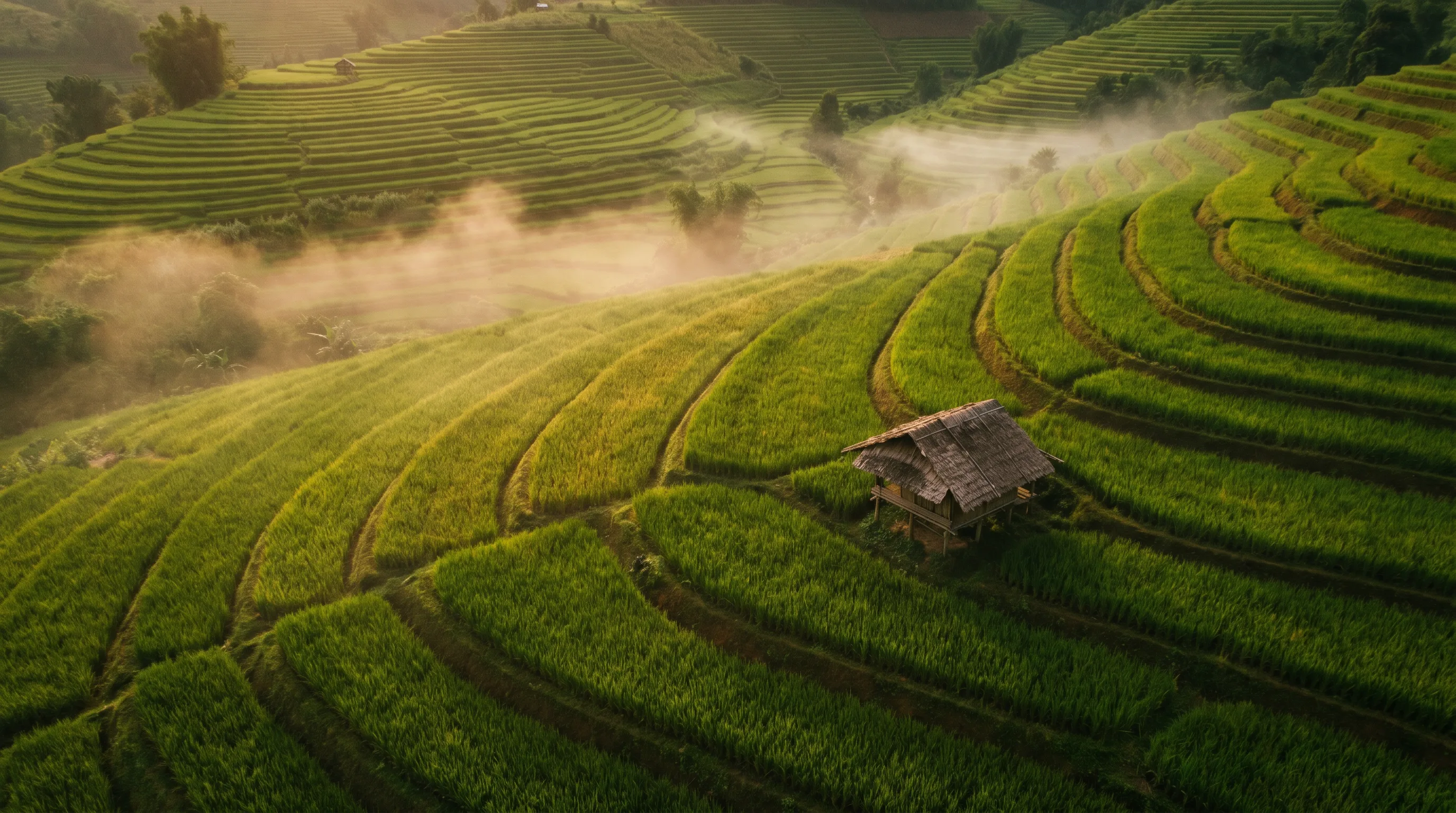
Bali’s dry season is straightforward. Less rain, lower humidity, perfect for Ubud’s rice terraces and the southern beaches. July and August are peak season with European holiday crowds — book everything early.
The wet season (November–March) brings daily rain but also lush green landscapes and surf on the west coast. Prices drop 30–40%. It’s honestly fine for a cultural trip focused on temples and inland areas. Skip it if you want beach days.
Sri Lanka: pick your coast
Sri Lanka’s trick is that when one coast is wet, the other is dry.
- West and south coasts (Colombo, Galle, Mirissa): December to March
- East coast (Trincomalee, Arugam Bay): April to September
The hill country (Ella, Kandy) is mild year-round but wettest in October–November.
Our move for clients who want both coasts: go in March or April, when the southwest is still pleasant and the east is waking up.
The short answer
If you want one safe window that works across most of the region: late November through early February. It’s peak season, so prices are higher and spots fill up. But the weather cooperates almost everywhere except Vietnam’s central coast.
If you want value and don’t mind some rain: May or June. Thailand and Bali are in early monsoon (light showers, not deluges), and flights from Europe are significantly cheaper.