Planning a trip budget sounds simple. Flights plus hotels plus food plus activities equals total. Done.
Except it never works that way. After reviewing hundreds of client trip reports, the same five mistakes come up over and over. They’re not about overspending on fancy hotels. They’re about invisible leaks.
1. Exchanging currency at the airport
The spread at airport exchange counters is typically 8–12%. On a €500 exchange, that’s €40–60 gone before you’ve even left the terminal.
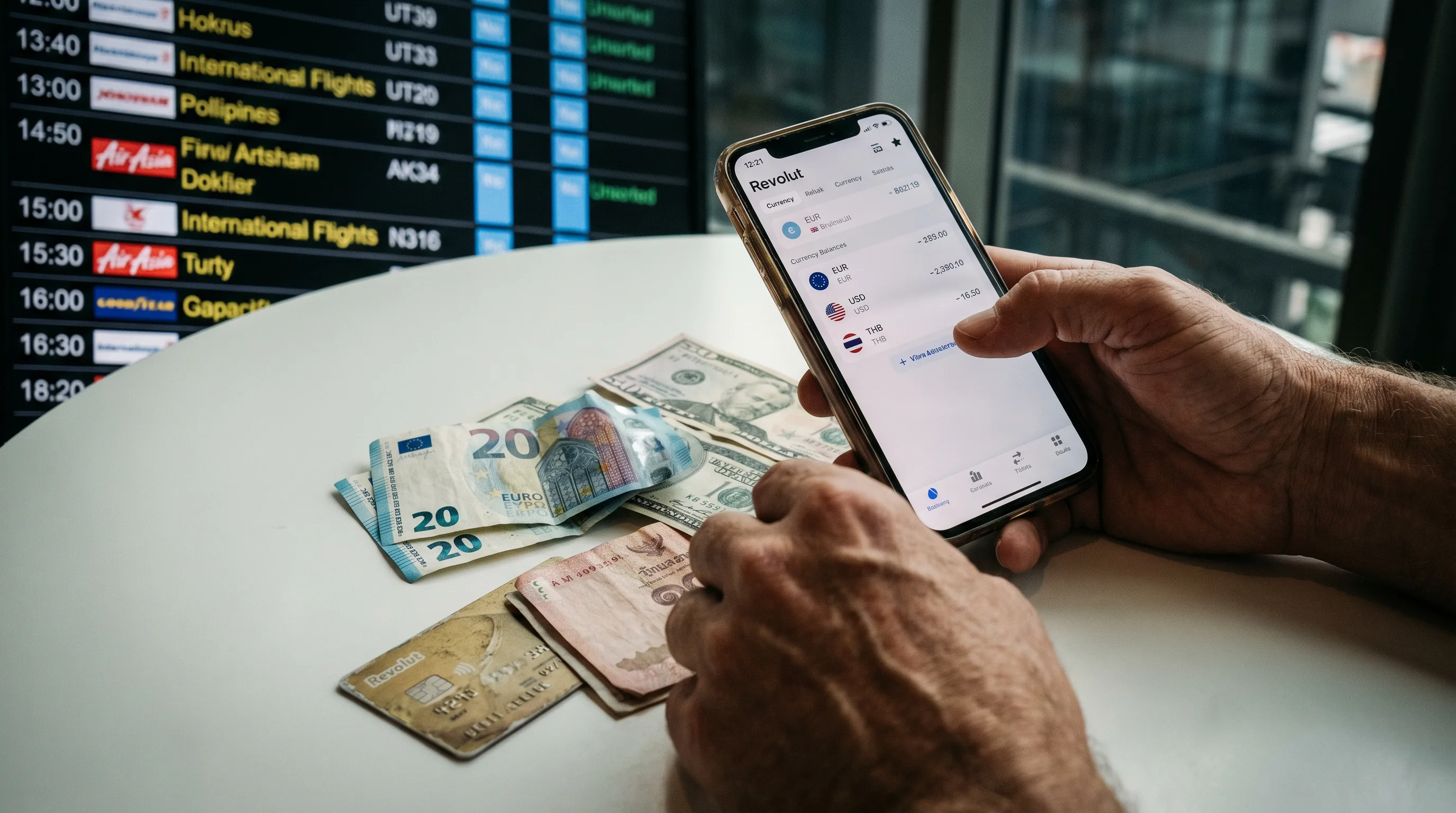
Use a travel-friendly debit card (Revolut, Wise, N26) and withdraw from ATMs at your destination. The rate is usually within 1% of mid-market. Even regular bank cards with a 2% foreign transaction fee beat the airport booth.
If you need cash on landing for a taxi, withdraw a small amount at the airport ATM — not the exchange counter.
2. Booking everything separately
Flight deal sites, one hotel aggregator, a different one for activities. It feels like you’re optimizing each piece. In practice, you spend 15 hours gluing things together and miss the packages that would’ve been cheaper.
This isn’t an argument for all-inclusive resorts. It’s an argument for planning the trip as a whole. A direct flight that costs €80 more might save you a hotel night and a €40 transfer. The cheapest hotel might be 45 minutes from anything you want to do, adding €20/day in transport.
Think in total cost, not line items.
3. Over-insuring
Travel insurance is worth it. But the premium multi-tier policy that covers trip cancellation for any reason, sports equipment, electronics up to €3,000, and dental work? Probably not.
Check what your credit card already covers (many gold/premium cards include trip cancellation and medical coverage — some handle baggage too). Then buy a basic policy that fills the gaps — usually medical and repatriation, which is the insurance you’d actually need in an emergency.
The average traveler doesn’t need €200 of insurance for a €1,500 trip.
4. Ignoring day-of-week pricing
Flights on Tuesdays and Wednesdays are consistently 15–25% cheaper than Friday or Sunday flights on the same route. Hotels in business cities (London, Singapore, Dubai) drop 30–40% on weekends. Beach destinations do the opposite.
Shifting your departure by one or two days can easily save €100–200 on a two-week trip. It’s the highest-return, lowest-effort optimization that most people skip.
5. Not budgeting for “nothing days”
Every trip needs downtime. But people don’t budget for it, so when they inevitably take a slow day, they feel guilty and overcompensate the next day with an expensive excursion they didn’t really want.
Build 1–2 unplanned days into your budget. A coffee, a walk, maybe a cheap lunch somewhere local. These days cost almost nothing and make the rest of the trip better. The alternative — running at full speed for 14 days — leads to bad spending decisions born from exhaustion.